

The Teletubbies Are the Future
Originally published in Spanish as “Los teletubbies son el futuro” by Revista Pesos on 18 July 2026. This English translation is published by Fenwick Pier with the permission of the author.
One night, some friends and I went out in the city of Posadas and ended up at Club Queer, where the drag queen Barbarita was gleefully celebrating the club's fourth anniversary. Covered in sequins, she told us stories about all that had happened there over the years while promising that, after the jingle, an incredible concert was about to begin. We waited for a while, and suddenly a group of young kids, heavily covered in make-up, appeared and started playing astonishing punk music about the suffering it means to be a human in this broken world of 2026. The whole situation was so extraordinary that, for the first time in a while, I felt excited about the future.
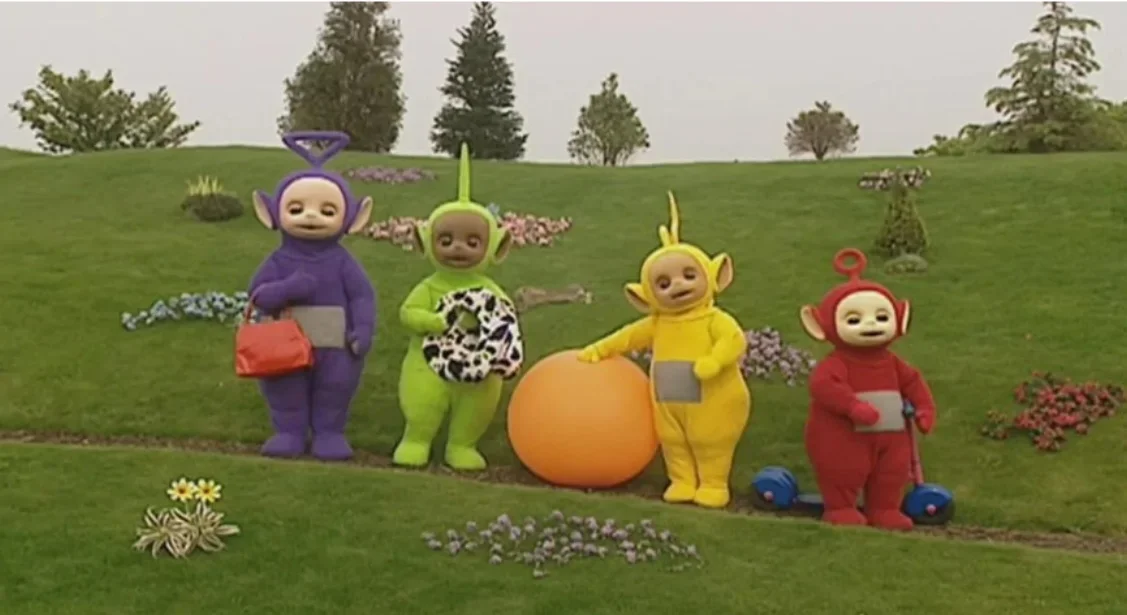
The singer, with her pink hair, is called Pinky Lala, and the drift of my thoughts carried me to the names of the Teletubbies: Dipsy, Laa-Laa, Tinky Winky, Po. Accompanied by the image of those four beings, as if in a prophetic vision, I caught a glimpse of the future landscape of humanity.
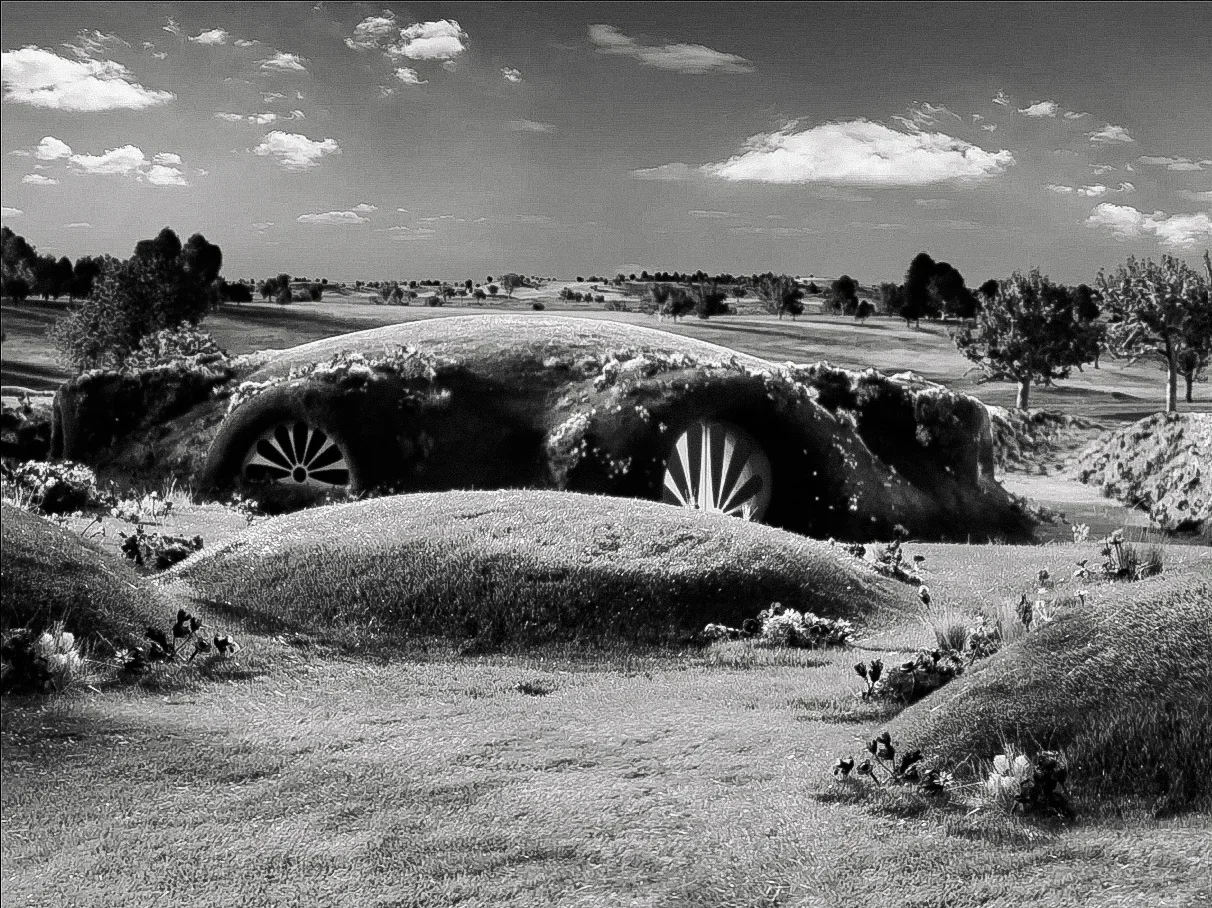
The Teletubbies are these gentle, clumsy, post-gender creatures, somewhere between Hobbits and cyborgs, living in a house beneath the earth—basically a hyper-technological burrow. Without hierarchies, they coexist with robots, spend their days playing in nature, have television screens embedded in their bellies, and count the sun among their friends. In other words, they are a commune of hippies in a distant future where humanity has prevailed and now devotes itself to the simple joy of living.
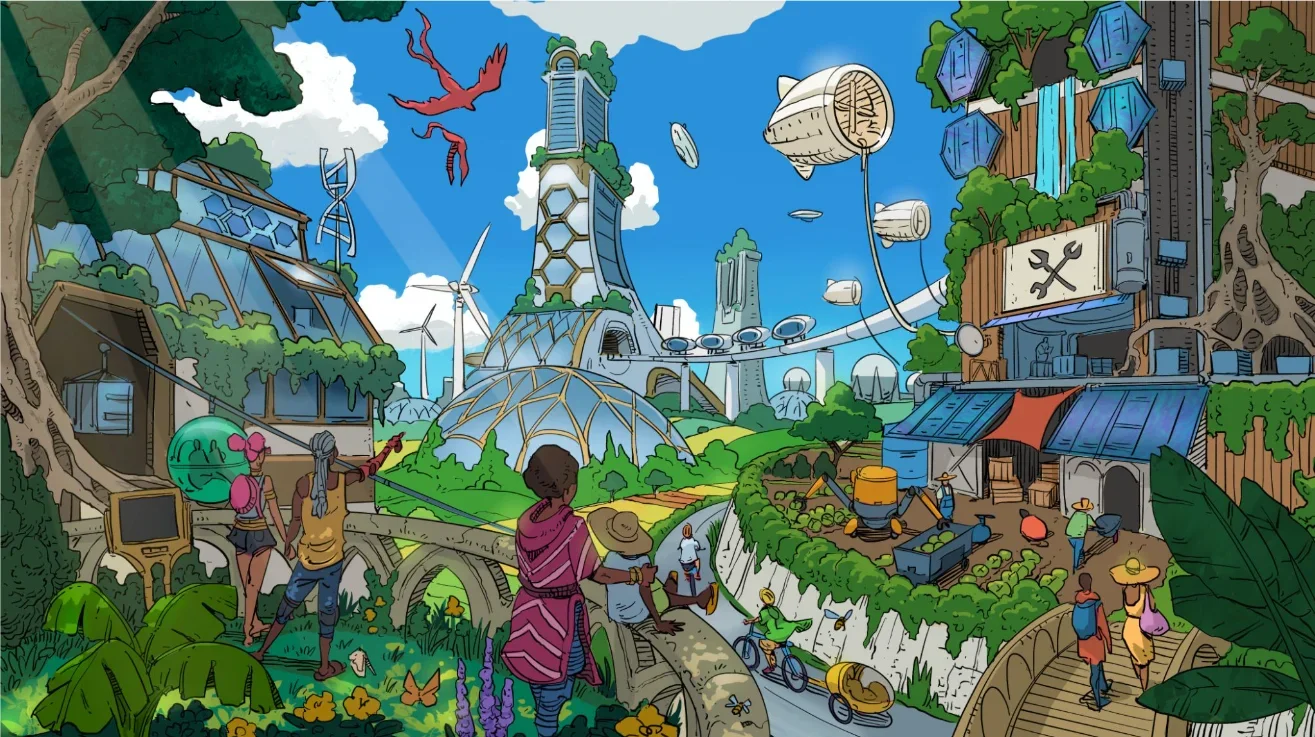
The Solarpunk movement emerged in 2008, in the depths of an internet that was still taking its first steps. In complete opposition to the escapist fantasies of today's techno-feudal lords—who can only imagine fleeing to Mars and abandoning a planet they assume is dying—Solarpunk imagines a fertile future here on Earth, where technology intertwines with living systems and seduces us with other possibilities.
Amid the dystopian futures constantly forced upon us, Solarpunk is a small ray of hope shining through the sewer that the internet has become. It may well be the compass that helps us navigate towards the new landscape already taking shape across the world, and especially here in the province of Misiones, Argentina.
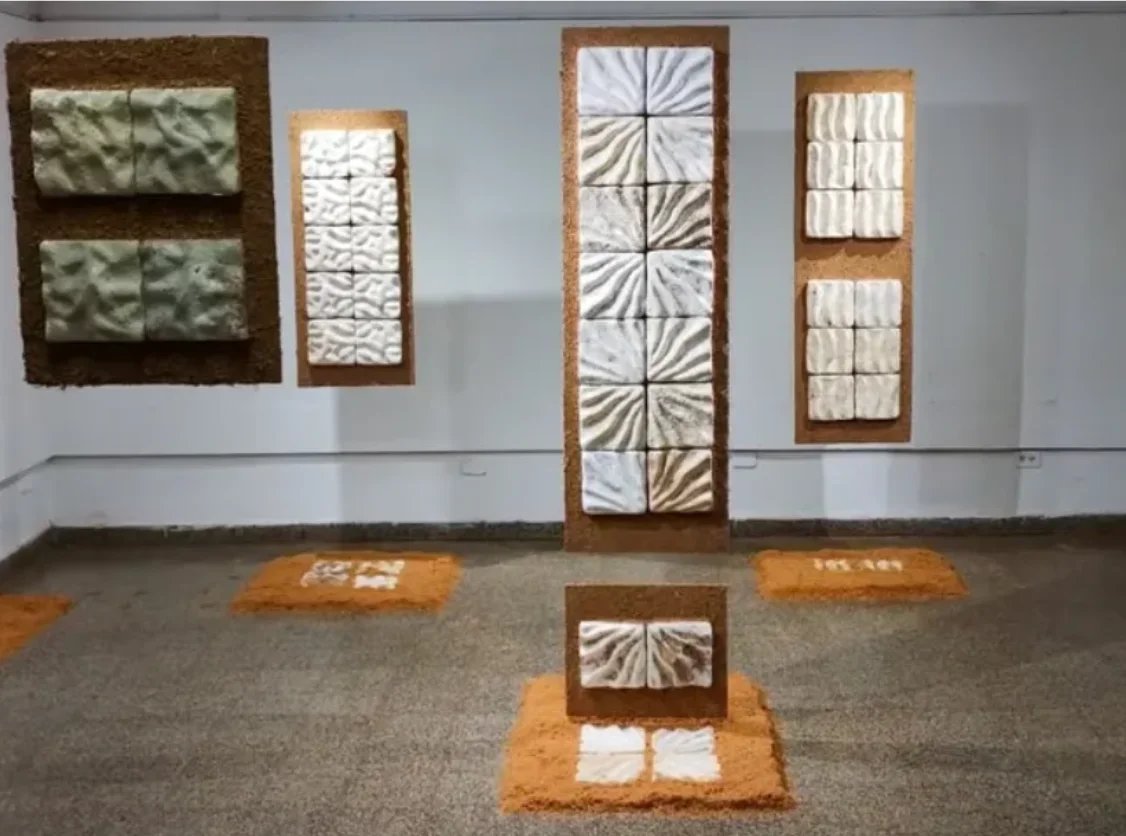
One artist working within this imaginary is Horacio Flores. From the city of Oberá, he inoculates mycelium into blocks of substrate, wraps them in plastic, and lets them grow. Just as paintings of Misiones' distinctive red dirt roads have shaped our collective imagination by fusing machine and nature into one canonical image of this territory, Flores's works present technology as something entirely entangled with living matter—so much so that form itself becomes nourishment.
With the curiosity of someone encountering an alien, the artist enters into dialogue with the mycelium. Out of that encounter bloom living sculptures that grow, respond to their environment, and change according to conditions the artist can never fully control. Mycelium is perhaps the oldest and most sophisticated network in this territory: an invisible underground infrastructure that connects organisms and transfers information between roots. Flores enters that network through laboratory work, creating bio-art with a distinctly local accent while blazing a new trail.
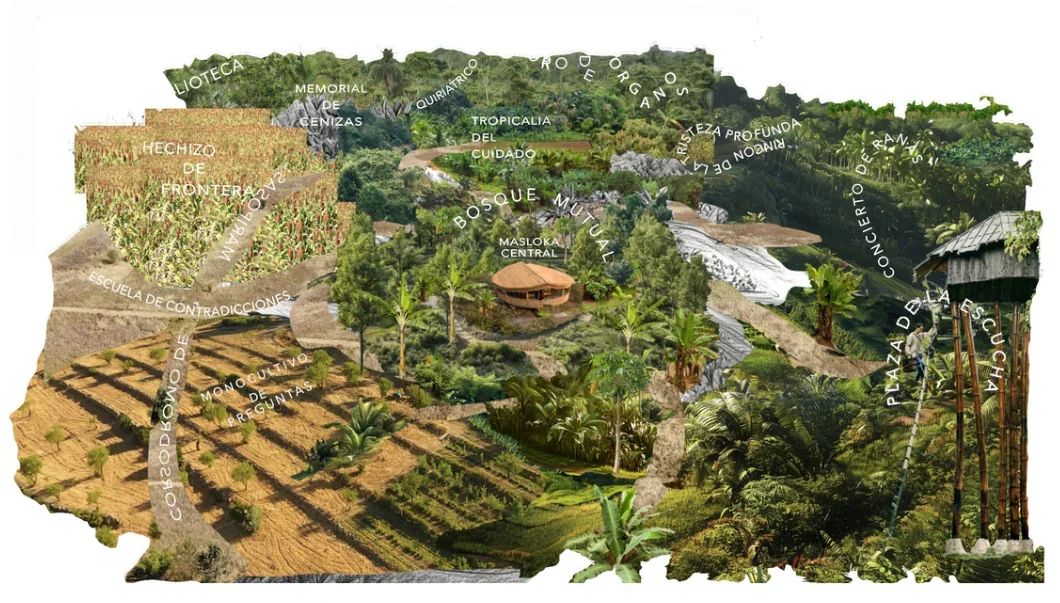
Meanwhile, on the banks of the Uruguay River, Sintropolis has recently emerged. Spread across a single hectare of forest on the Argentine-Brazilian border, it is simultaneously an assembly, a school, and a cultural experiment. Taking as a starting point today's ecological crisis and the exhaustion of the contemporary art system, this collective of artists still believes that art holds complex answers for these desolate times. From that conviction, they stake their claim at the border and invent new ways of inhabiting unfamiliar territory.
Drawing upon their backgrounds in the visual arts, they map the landscape in order to recognise living practices already present there. From that starting point, they adopt the principles of syntropic agriculture, where every organism fulfils a specific role within the ecosystem and extend them into the symbolic realm to regenerate practices, narratives, and relationships. Rather than representing the landscape, they intervene directly within it. Working according to its own rhythms, they dream of alternative ways of living on the earth: cultivating alongside new alliances, using the rainforest itself as a methodology, and remaining committed to the urgent task of imagining futures that are still possible. A Solarpunk shoot sprouting in this borderland landscape.
And, of course, it would be absurd to think about Solarpunk without thinking about the Indigenous communities that have lived on this land in harmony with nature for millennia. The Mbya Guaraní communities are the original inhabitants of this territory, and their practices leave almost no harmful trace upon the land they inhabit.
The Mbya Guaraní are active custodians of this biodiversity, and only recently has the ecological effectiveness of their practices begun to be measured.
Back in Oberá, where Flores works, another initiative has appeared: Loma Porá, an agroecological grocery store and cultural space that brings together art, agriculture, and natural medicine under one roof. If Sintropolis takes syntropy as its methodology, Loma Porá takes the neighbourhood grocery.
Buying local produce, organising workshops on regional culture, and building a network of conscious consumers all stem from the understanding that every peso we spend is a vote financing a particular kind of future. Campaigns against something often end up reinforcing the very thing they seek to change. Instead, Loma Porá proposes directing resources towards those who are already building something different, the producers who are investing their time and energy in planting the seeds of another world.
All of this is simply to say that our imagination is the last territory left to conquer. And although the tech-bros pour obscene amounts of money into convincing us that the future will be terrifying, we need to pay attention to what is already alive, and to how our landscape is transforming in real time.
To think of landscape as something static is a mistake. It is always moving, bending, twisting itself. Learning to recognise the mutations that appear is essential if we are to understand where and how we live. The projects described here are futures growing quietly, almost in whispers, preparing the mycelium before it finally breaks through the surface.
Perhaps the Teletubbies, too, were rehearsing a possible future on their green hill while we watched, never quite understanding what they were trying to show us.
1 Frutiger Aero is a design style that was highly popular from the mid-2000s to the early 2010s, particularly in computer and mobile-phone interfaces. It is characterized by bright colours, lighting and transparency effects, and the combination of natural imagery, such as fish, water, plants, and blue skies with modern technology, creating a sense of optimism and a friendly vision of the future. ↩
2 https://www.argentinaforestal.com/2024/12/06/misiones-es-primera-provincia-del-pais-en-contar-con-un-inventario-de-biodiversidad/ ↩
3 https://www.argentinaforestal.com/2023/02/25/misiones-jasy-pora-es-la-primera-comunidad-indigena-del-pais-en-certificar-ante-el-inase/ ↩