

Little Death, Little Star
Liberation is commonly imagined as the removal of constraints. Yet what if it does not emerge through the expansion of freedom, but through its suspension?
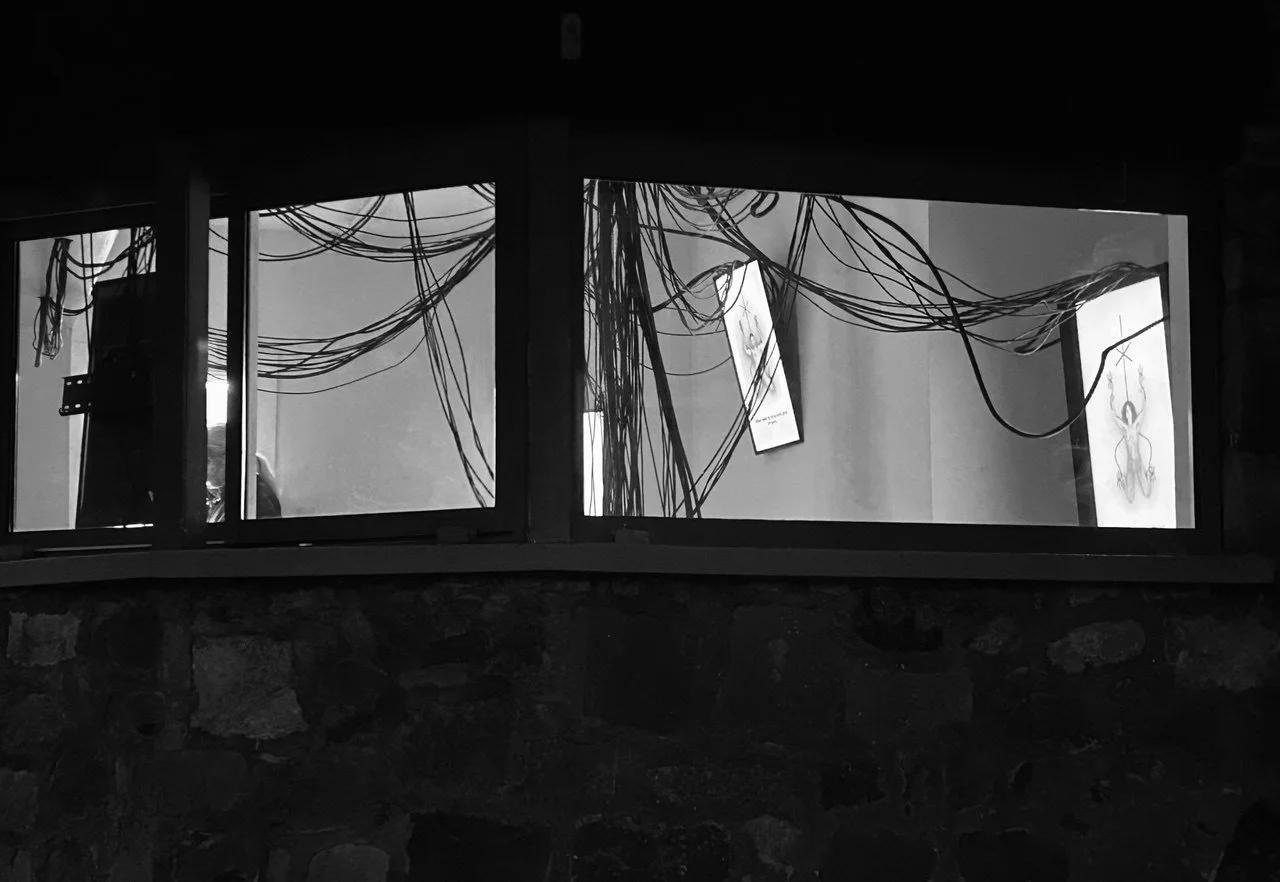
Installation view, Solo Exhibition of Gintarė Sokėlytė Asterisk at Neue Kunstverein Gießen, Courtesy of the artist
Gintarė Sokėlytė’s current solo exhibition, Asterisk, at Neue Kunstverein Gießen opens up a discussion about the relationship between the individual and power, between restraint and liberation. Rather than presenting power as something possessed by a singular subject, the exhibition invites us to reconfigure how agency emerges through vulnerability, surrender, and relations that exceed the boundaries of the individual self. (1)
When the hands and legs are tied, a person willingly or unwillingly relinquishes control of their body—the primary channel through which they experience and negotiate the world. It is an intensely unfree condition. Yet loss of control opens the possible portal to liberation. Not liberation as absolute freedom, but as the temporary suspension of the autonomous self.
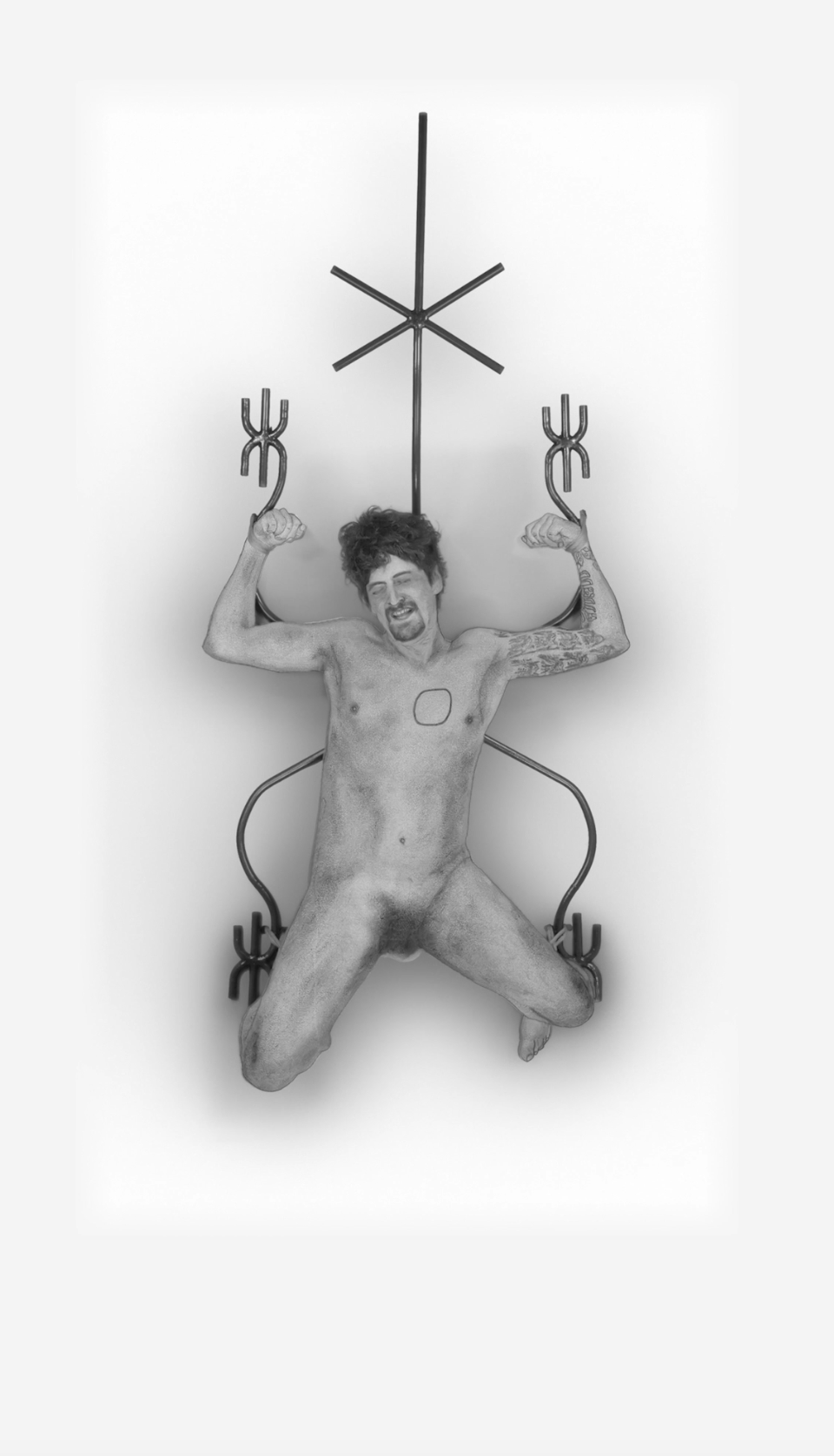
Gintarė Sokelytė * (Asterisk) 2023 film still ©Frankfurter Kunstverein Courtesy: the artist
We spend our energies navigating decisions, negotiating possibilities, and defining ourselves against others. We debate binaries: freedom and limitation, privilege and marginality, power and vulnerability, autonomy and dependence, as if they exist separately. Yet perhaps they are the polarised projections of the same condition.
In Asterisk, restraint is not only a condition of limitation but also a site where pleasure, relief, or transformation may emerge through surrender. This dynamic extends beyond the body itself. It can be found in religion, nations, corporations, sports teams, and even the social hierarchies of a high school clique. These examples are not the same, yet they are structures that share common belief systems, regulations, and objectives: each involves the partial surrender of individuality into a larger system, relation, or collective body.
Collective identities often require the partial suspension of individuality. Rituals, beliefs, relationships, and systems of belonging all involve moments in which personal autonomy is negotiated, surrendered, or taken over to different degrees. In these moments, the boundaries of the self begin to loosen. One ceases to exist solely as an individual and becomes part of something larger—a community, a belief system, a collective body, or a structure of relations that exceeds the limits of a single person.
The pleasure of surrender may lie in this temporary dissolution of the self, where agency is not lost but redistributed across a larger whole. If agency can be understood as relational rather than individual, then moments in which the self appears to dissolve invite us to reconsider what it means to lose or redistribute agency. Orgasm is sometimes described as la petite mort—the little death. Death, in turn, is often understood as the ultimate loss of agency.
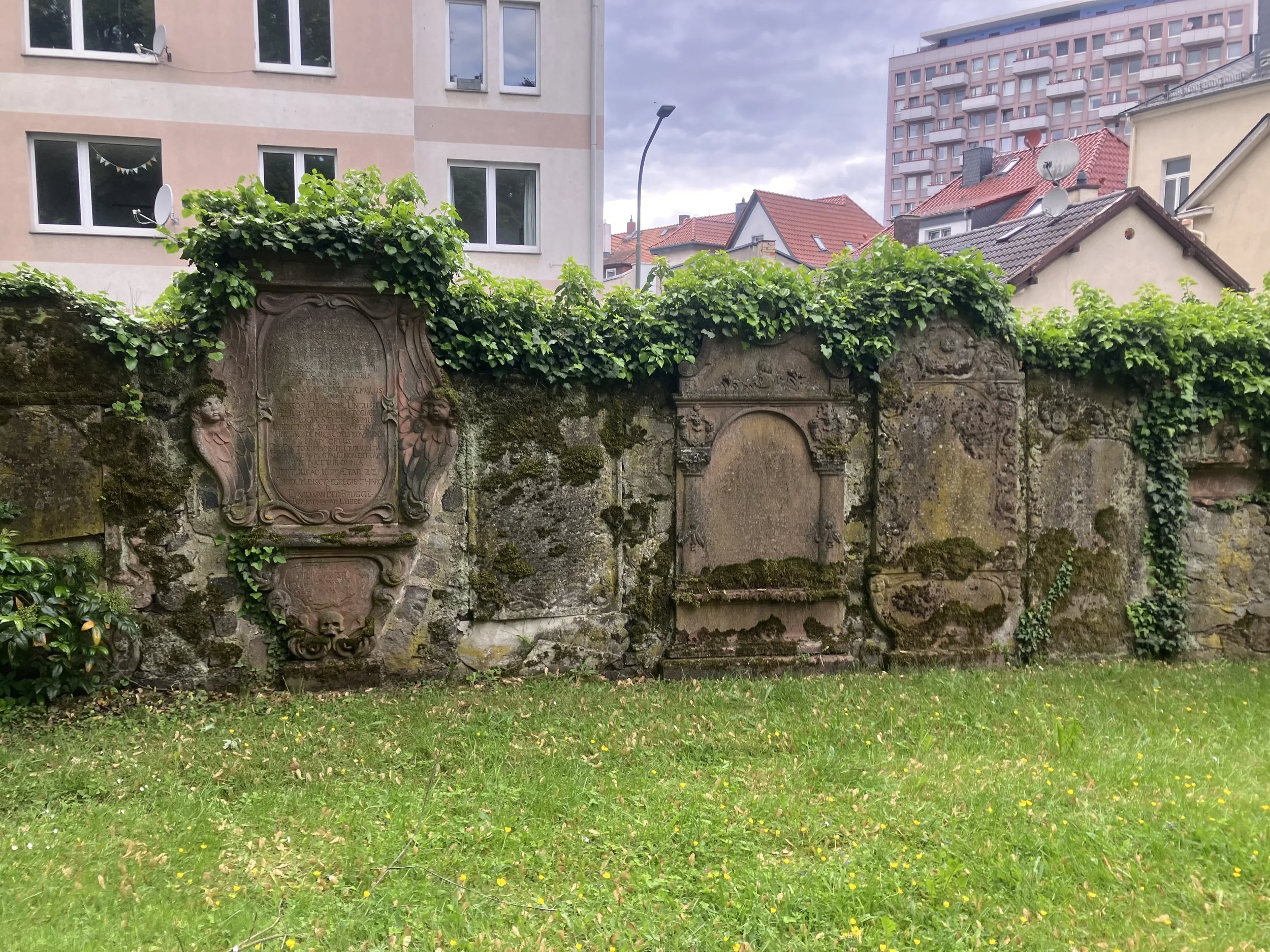
Alter Friedhof Gießen
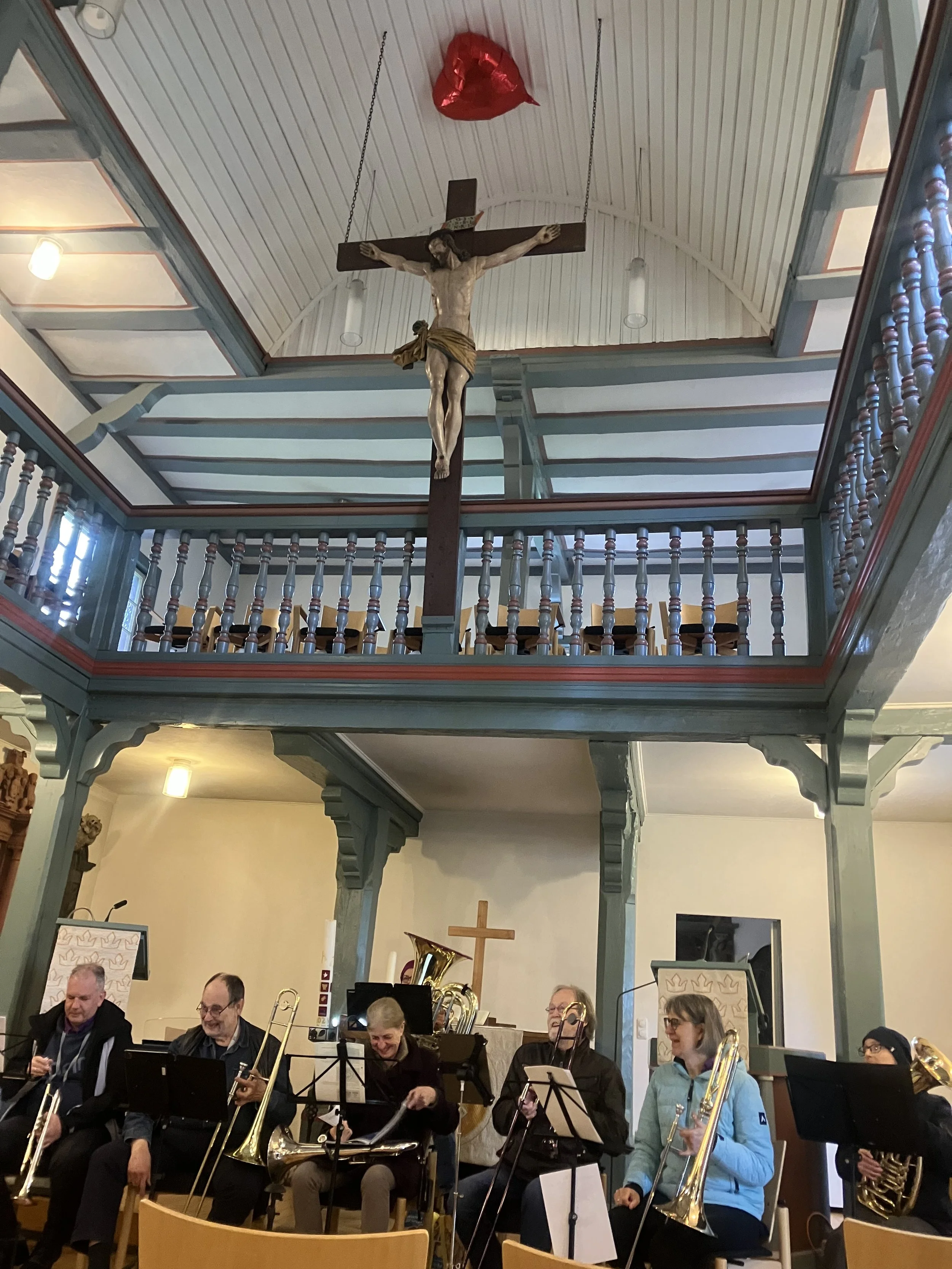
The church inside Alter Friedhof Gießen
The exhibition unintentionally enters into a dialogue with its surroundings. Behind the Neue Kunstverein Gießen lies the Alter Friedhof, a historic cemetery established during periods of plague to accommodate the overwhelming number of deaths. (2) What was once a site of burial has since become a memorial park. (3) The Kunstverein itself, formerly a Wasserhäuschen, a modest drinking hall where people once gathered for drinks, snacks, and daily exchange. (4) This former Wasserhäuschen has been transformed into a space for culture and contemporary art, which continues its function as a gathering place.
Located at the corner of the cemetery connecting with the crossroad of Gießen city, the exhibition itself turns into an asterisk within its environment: a marker pointing beyond what is immediately visible, reminding us that what exists extends beyond daily lives, beyond death, and beyond the definition of an exhibition, and beyond the limits of an individual physical body. The body dissolves into soil after death, yet its presence persists through memory, ritual, and the traces it leaves behind. Similarly, an exhibition does not end after the finissage when the artworks are removed. It dissolves into the texture of the city, into conversations, encounters, relationships, and how people remember it turning into context lies behind an asterisk. Both the cemetery and the exhibition point toward something beyond themselves—toward forms of presence that continue after their material manifestation has disappeared.
Resonating with the five radiating lines of the asterisk mark “*” when the finissage, the five vertically suspended screens echo the monuments and gravestones visible beyond the wall. The screen and coffin become parallel containers of bodies. One contains a body physically dissolved through time; the other contains bodies digitally dissolved through algorithmic transformations and the artist's drawings created by Gintare. In the original version of *(Asterisk), five volunteers formed the basis of the work. Yet their bodies never fully appeared. Instead, they dissolved into combinations of image, data, gesture, and representation. In the current exhibition, only four of the original screens remain. Due to personal circumstances, one participant withdrew, leaving an absence within the work itself. (5) To complete the five-part structure, Gintarė invited performance artist Denise Lim to collaborate on a performance during the exhibition opening on 3 May 2026. The performance was later documented on video and incorporated into the installation with the fifth screen, becoming a new iteration of artwork *(Asterisk).
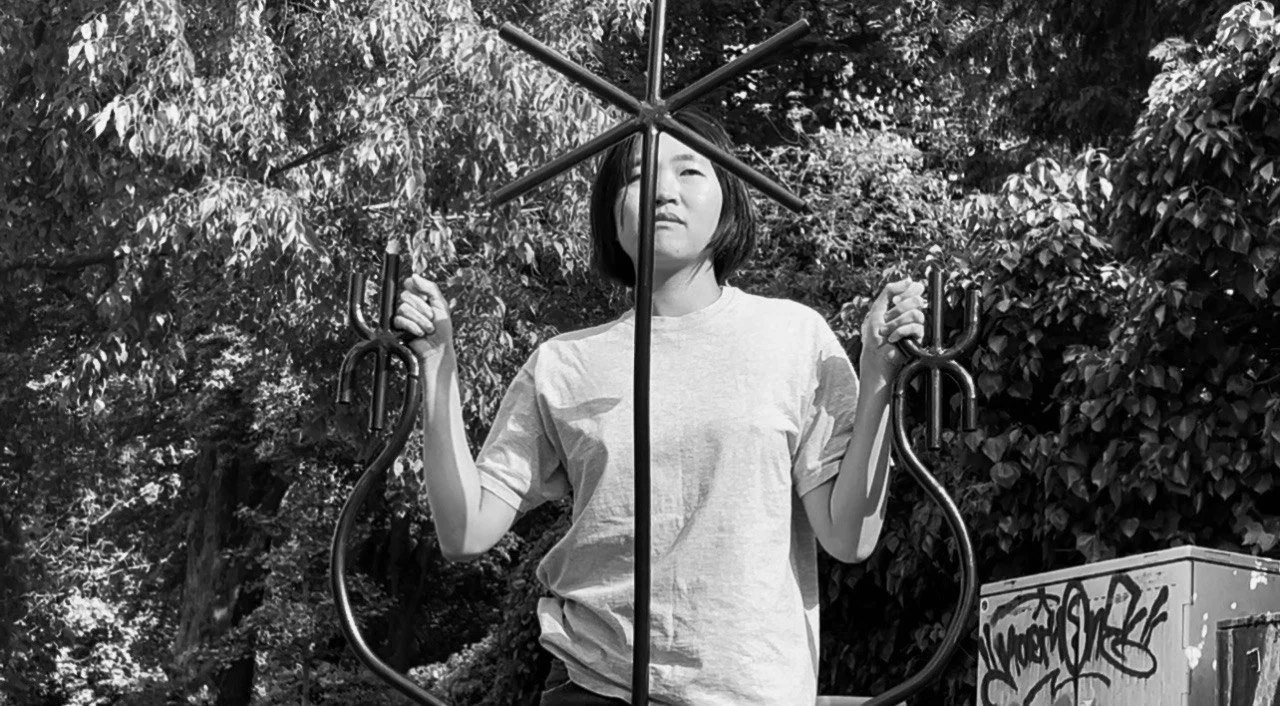
Denise Lim’s performance on Gintarė Sokelytė’s Asterisk exhibition opening in Neue Kunstverein Gießen on 3 May, Courtesy of the artists
Denise's body is not represented through direct visible restraint. Instead, she carries the metal asterisk structure as the performance of restriction through the streets of Gießen, crossing the road, moving through the city as an ordinary citizen living here with her most daily outfit: a pair of sunglasses, a gray shirt, a pair of jeans, and a pair of sneakers. Through this gesture, Asterisk reveals another layer that is connected to everyday life. The performance extends our attention from explicit images and symbolism to the invisible structures that shape our daily existence. We are all, in different ways, bound to systems, beliefs, relationships, and social expectations. These structures provide support while simultaneously imposing limitations. Within them, suffering and pleasure, limitation and liberation, rarely exist independently.
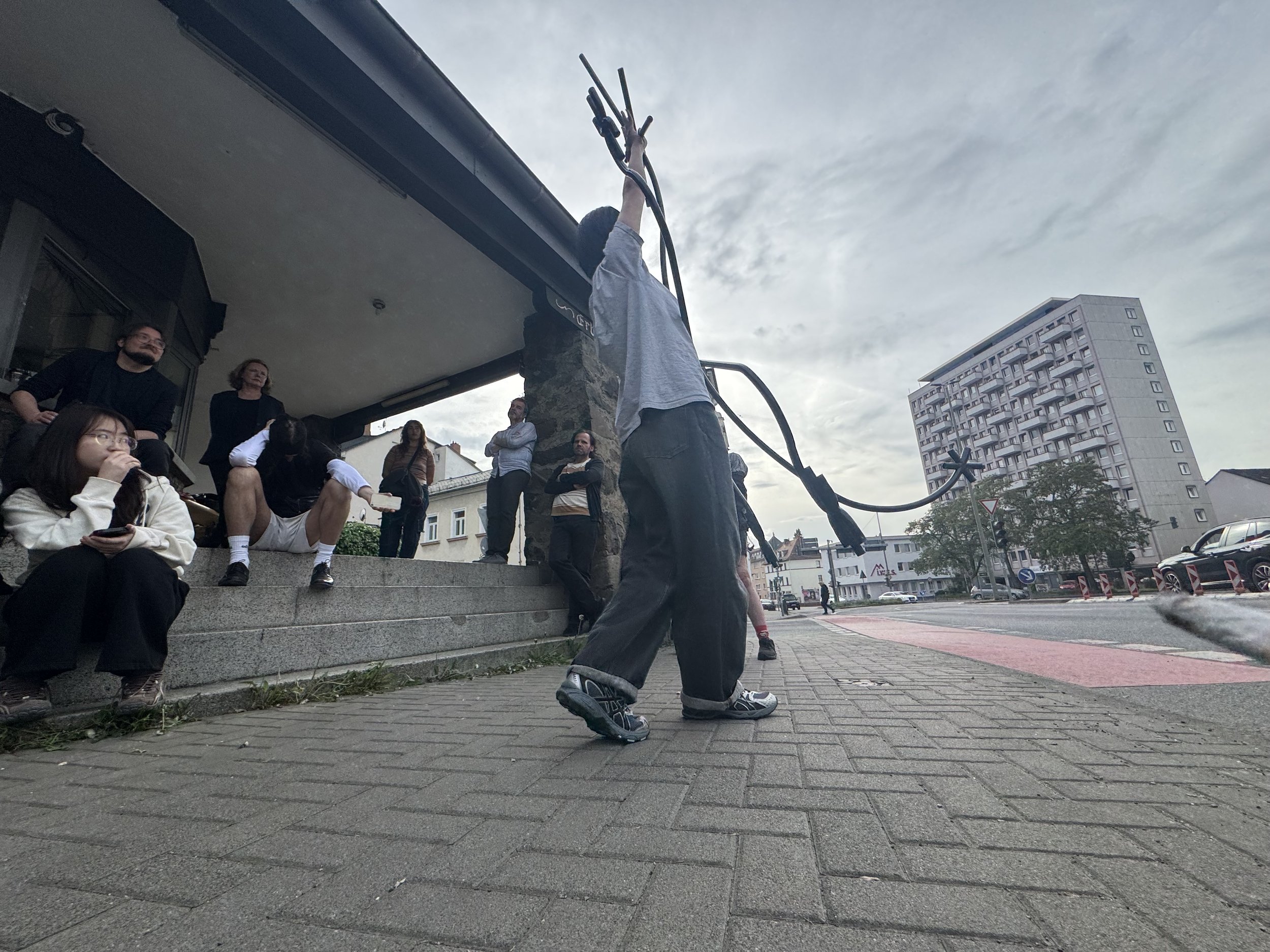
Denise Lim’s performance on Gintarė Sokelytė’s Asterisk exhibition opening in Neue Kunstverein Gießen on 3 May, photo by Sheyang Sibo, Courtesy of the artists
At the end of the performance, Denise removes her clothes. She places her body behind it and turns her back towards the metal asterisk lying on the street as if shedding a socialised identity. Yet is this body truly escaped it? Even in this gesture of apparent release, the form of a human body continues to resonate with the metal structure behind her. The position of her body mirrors the form of the asterisk. The two arms, two legs, five fingers, and five toes exposed to the viewer echo its five radiating points at the every end of it.
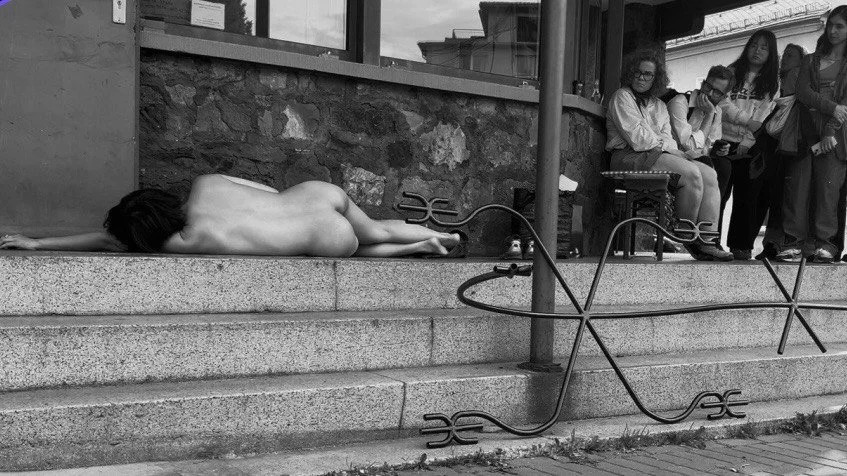
Denise Lim’s performance on Gintarė Sokelytė’s Asterisk exhibition opening in Neue Kunstverein Gießen on 3 May, Courtesy of the artists
I do not read the exhibition as a critique of power. Rather than condemning or celebrating these structures or individuals, Asterisk reveals their entanglement. It makes visible the networks of relations, dependencies, and forms of surrender that already shape our lives. The work *(Asterisk) is neither offering an escape from these conditions. Instead, it invites us to recognise how deeply we are entangled within them, where seemingly opposing forces are less contradictions than mutually constitutive conditions of one another.

Gintarė Sokelytė, * (Asterisk) 2023-2024 Installation view Frankfurter Kunstverein 2024 Photographer: Norbert Miguletz ©Frankfurter Kunstverein Courtesy: the artist
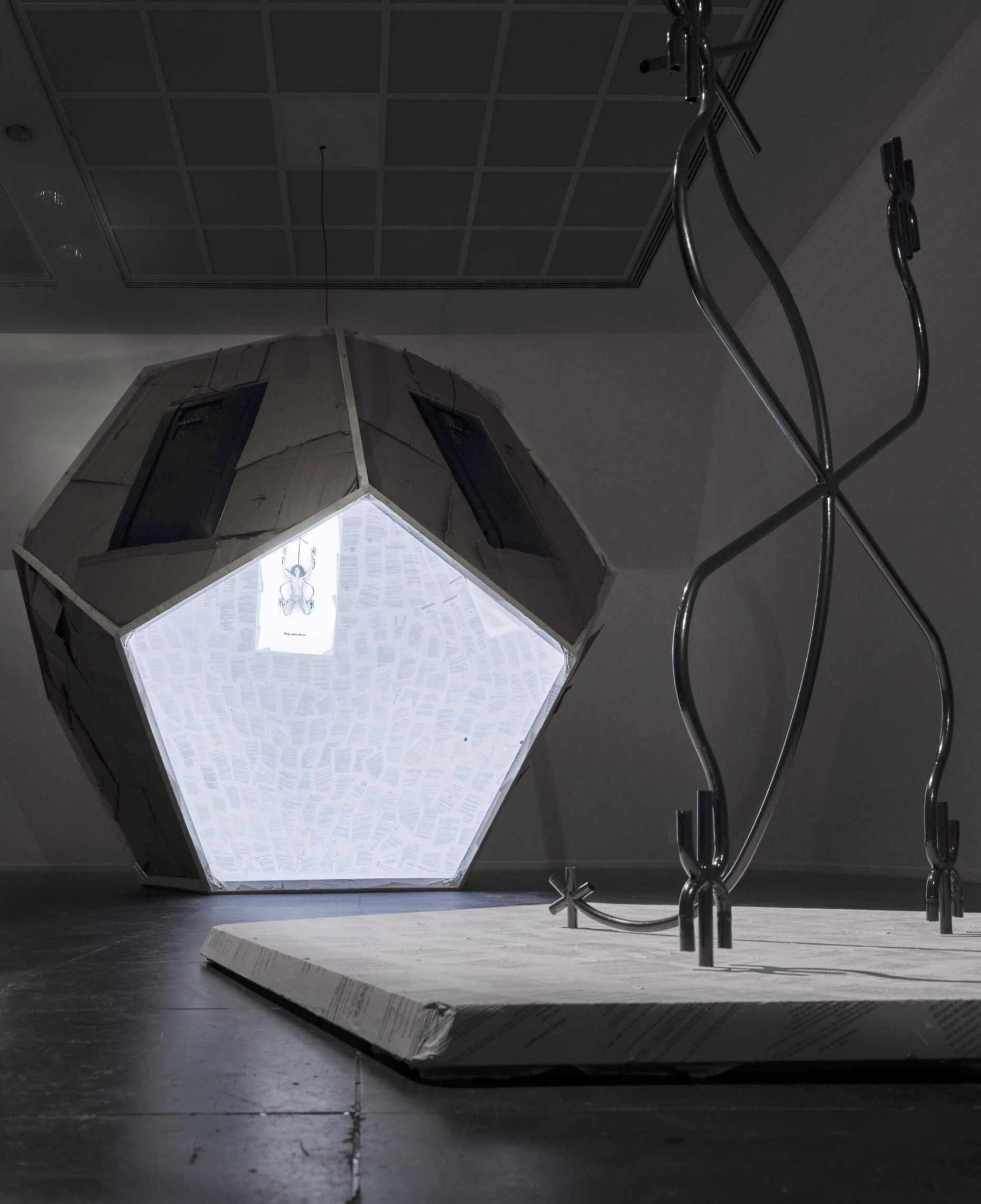
Gintarė Sokelytė, * (Asterisk) 2023-2024 Installation view Frankfurter Kunstverein 2024 ©Frankfurter Kunstverein Courtesy: the artist
Gintarė’s *(Asterisk) was first presented in the duo exhibition Who Has Power? Striking Bodies with Sonja Yakovleva, curated by Franziska Nori at Kunstverein Frankfurt in 2023. Given the work in a different context in Gießen in the form of a solo show, the question of power seems to shift its weight. Rather than asking who possesses power, the work suggests that power emerges through relations of surrender, vulnerability, and transformation. The tied body is neither dominant nor submissive, neither free nor constrained. It exists in a status where such distinctions begin to dissolve– the moment of la petite mort(the little death), a moment of extreme vulnerability. Yet vulnerability has nothing to do with weakness. It becomes a precondition for intimacy, transformation, and connection, thus a condition of pleasure. The tied body is vulnerable not because it lacks agency, but because it enters into a relation that exceeds the limits of individual autonomy.
The title itself offers another clue. The word “asterisk” derives from the Greek asteriskos, meaning “little star.” Traditionally, the asterisk functions as a marker that directs attention elsewhere—to a footnote, an omission, or a hidden condition. It suggests that what is visible is incomplete, and that meaning continues beyond the immediate frame.⁷ In the title of the artwork, Gintarė names it *(Asterisk). I read her choice to place the word “Asterisk” inside parentheses as a shift in the power dynamics between literal and symbolic language. The symbol precedes the word, while the word remains in the position that serves as an alternative explanation to the symbol. In this gesture, the title itself becomes a material that manifests the logic: every circumstance carries a hidden condition, and what appears before us can always be interpreted otherwise. Language itself is also one of these structures: a system of communication while also constraining how we think, feel, and name experience. Yet how else could we speak to one another?
reference:
Neuer Kunstverein Gießen. “Gintarė Sokelytė: Asterisk.” Exhibition page. Accessed 21 June 2026. https://www.kunstverein-giessen.de/ausstellungen.html
Justus Liebig University Gießen, Panel on Planetary Thinking. “Neuer Kunstverein Gießen e.V.” Accessed 21 June 2026. https://www.uni-giessen.de/de/fbz/planetarythinking/ueberuns/kooperationen/kunstverein
Karola Schepp. “Alter Friedhof wird zum Hörerlebnis.” Gießener Allgemeine, 28 March 2019. https://www.giessener-allgemeine.de/giessen/alter-friedhof-wird-hoererlebnis-11976972.html
“Neuer Kunstverein Gießen.” Wikipedia. Accessed 21 June 2026. https://de.wikipedia.org/wiki/Neuer_Kunstverein_Gießen
Information provided by Gintarė Sokėlytė in conversation with the author, 2026.
Frankfurter Kunstverein. “Gintarė Sokelytė & Sonja Yakovleva – Who Has Power? Striking Bodies.” Exhibition page. Accessed 21 June 2026. https://www.fkv.de/en/exhibition/gintare-sokelyte/
Douglas Harper. “Asterisk.” Online Etymology Dictionary. Accessed 21 June 2026. https://www.etymonline.com/word/asterisk
